
Date: September 9th 2025
In the relentless pursuit of perfect sound reproduction, material science has played a central role. Among the latest innovations, CVD diamond acoustic diaphragms are emerging as the gold standard for high-end audio applications. With their unmatched hardness, superior thermal conductivity, and ultra-wide frequency response, these diaphragms are transforming how we experience sound.
Introduction to Acoustic Diaphragms
The Role of Diaphragms in Audio Devices
At the heart of every loudspeaker, headphone, or microphone lies a diaphragm—a thin membrane that converts electrical signals into mechanical vibrations, thereby producing sound waves. The diaphragm’s material determines frequency response, clarity, and distortion levels.
Traditional Materials vs. Diamond
Historically, diaphragms have been made from polymers, paper, titanium, or beryllium. While each material has strengths, none combine all the properties required for ultimate fidelity. Diamond, with its unparalleled stiffness-to-weight ratio, has entered the field as a game-changer.
What Is CVD Diamond?
The Chemical Vapor Deposition Process
CVD (Chemical Vapor Deposition) is a plasma-assisted process where hydrocarbon gases (like methane) are broken down, and carbon atoms are deposited layer by layer onto a substrate. This creates a polycrystalline diamond film of controllable thickness.
- Growth rates: typically 0.5–10 µm/hour.
- Film thickness: from a few microns to several hundred microns.
- Purity: >99.9% carbon, ensuring near-perfect lattice structure.
Material Properties of CVD Diamond
- Hardness: 10 on Mohs scale (the hardest known material).
- Density: 3.52 g/cm³ (lightweight for its stiffness).
- Thermal conductivity: up to 2200 W/m·K (five times that of copper).
- Young’s modulus: ~1050 GPa (exceptional stiffness).
These properties make it ideal for acoustic applications.
Why CVD Diamond for Acoustic Diaphragms?
Superior Hardness and Durability
CVD diamond diaphragms resist mechanical fatigue and deformation, ensuring sound performance remains stable even after tens of thousands of hours of use.
Exceptional Thermal Conductivity
High thermal conductivity helps dissipate heat quickly, preventing thermal distortion in high-power speakers.
Wide Frequency Response
Thanks to their stiffness and low mass, CVD diamond diaphragms can achieve a frequency response beyond 100 kHz, covering not only human hearing but also ultrasonic ranges used in professional applications.
Low Distortion and High Clarity
Measurements show diamond diaphragms reduce Total Harmonic Distortion (THD) by 30–50% compared to titanium diaphragms, resulting in crystal-clear sound reproduction.
Technical Comparisons with Other Materials
| Property | Polymer (PET) | Titanium | Beryllium | CVD Diamond |
|---|---|---|---|---|
| Young’s Modulus (GPa) | ~4 | ~116 | ~287 | ~1050 |
| Density (g/cm³) | 1.3 | 4.5 | 1.8 | 3.52 |
| Thermal Conductivity (W/m·K) | 0.15 | 22 | 200 | 2200 |
| Frequency Response | <30 kHz | ~50 kHz | ~70 kHz | >100 kHz |
| THD Performance | Moderate | Good | Very Good | Excellent |
Applications of CVD Diamond Acoustic Diaphragms
High-End Headphones and Earphones
Brands targeting audiophiles are increasingly adopting diamond diaphragms for unparalleled sound realism.
Professional Studio Monitors
In recording studios, accuracy is critical. Diamond diaphragms deliver flat response curves for true-to-source playback.
High-Fidelity Loudspeakers
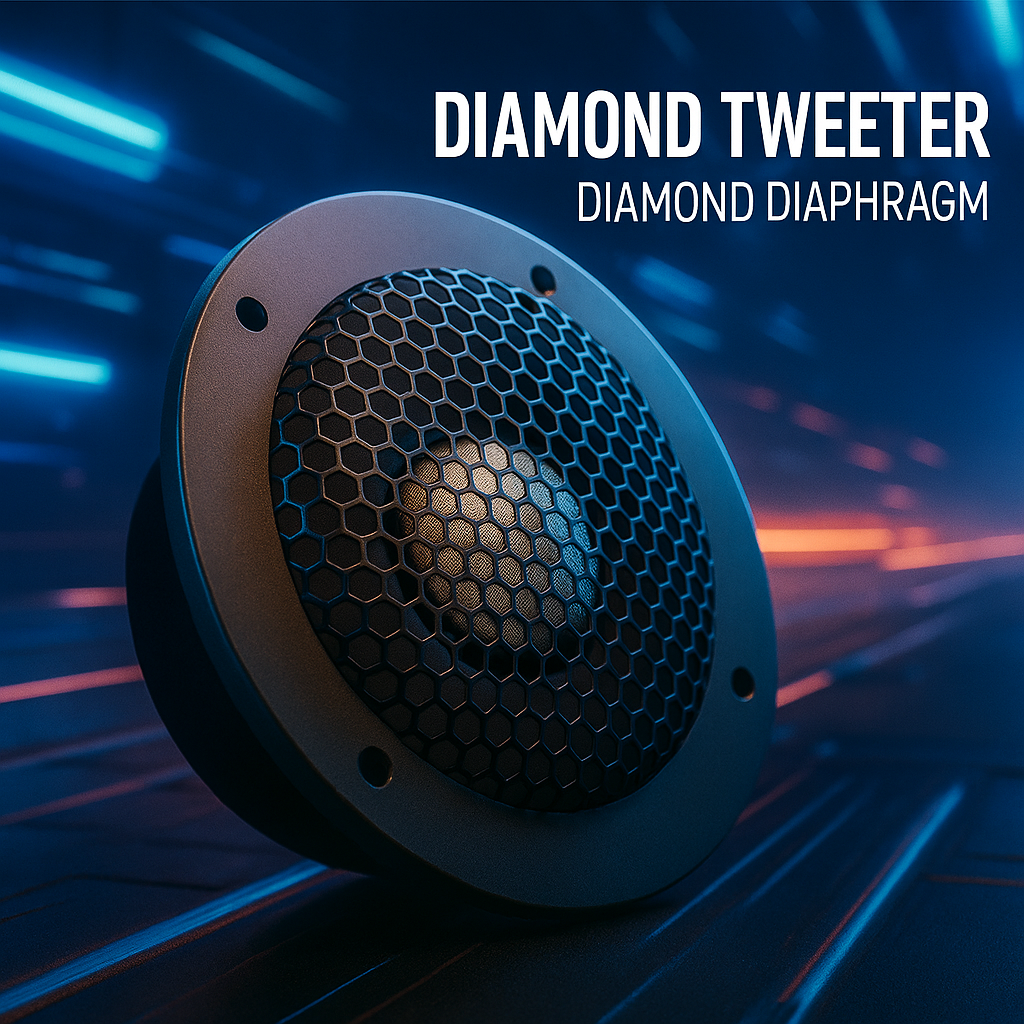
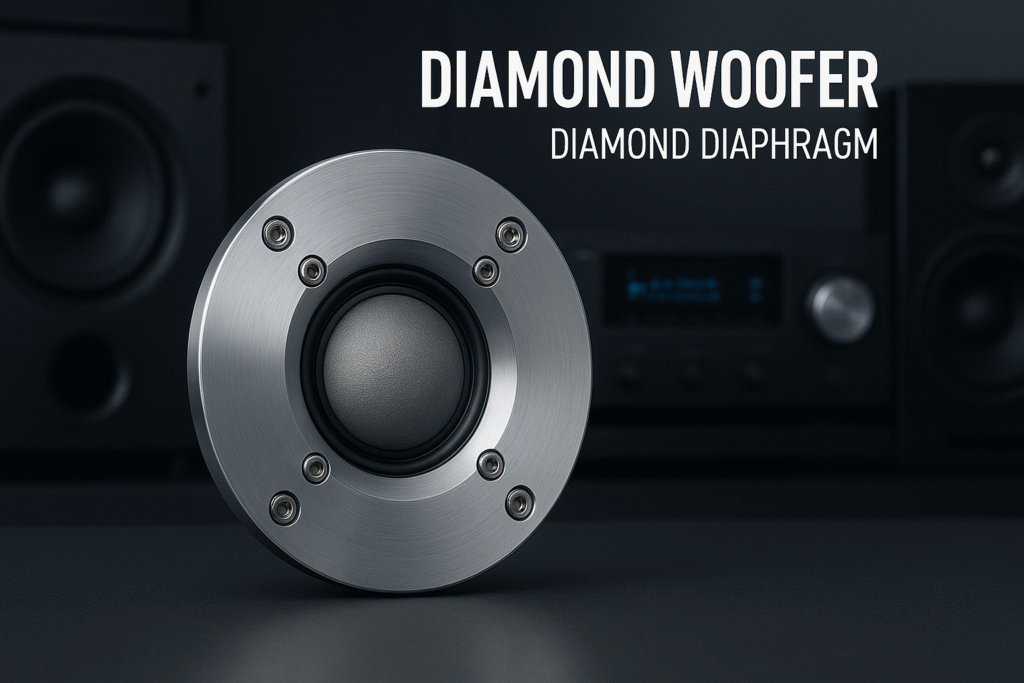
Luxury speaker systems utilize diamond tweeters to achieve lifelike performance across frequencies.
Aerospace and Defense Audio Applications
Diamond diaphragms can withstand harsh environments, making them suitable for defense communication systems and ultrasonic sensors.
Manufacturing Challenges and Solutions
Precision Cutting and Shaping
Diamond films are extremely hard to machine. Laser micromachining and ultrasonic grinding are typically used.
Bonding with Other Components
Bonding diamond films to voice coils requires specialized adhesives and surface treatments.
Cost and Scalability
CVD processes remain expensive, but technological advances are driving costs down by 15–20% annually.
Case Studies and Market Insights
Adoption in Luxury Audio Brands
Several luxury brands (e.g., Bowers & Wilkins, Focal) already use diamond tweeters in flagship products.
Growth in Professional Audio Market
The global acoustic diaphragm market is expected to grow at a CAGR of 7.5% (2024–2030), with diamond-based materials leading innovation.
Environmental and Sustainability Benefits
Longer Lifespan and Reduced Waste
Due to their durability, diamond diaphragms last significantly longer than polymer or titanium alternatives, reducing replacement waste.
Energy Efficiency in Manufacturing
Modern CVD techniques are energy-optimized, lowering the carbon footprint compared to traditional mining or smelting.
Future Trends in Diamond Acoustic Technologies
Hybrid Materials
Researchers are developing diamond-coated graphene structures that combine flexibility with stiffness.
Nanostructured Diamond Diaphragms
Advances in nanocrystalline CVD diamond films promise lighter, thinner, and more responsive diaphragms.
FAQs on CVD Diamond Acoustic Diaphragms
Q1: What makes CVD diamond better than beryllium?
A: CVD diamond offers higher stiffness, better heat dissipation, and lower distortion, while being safer to handle.
Q2: Are diamond diaphragms only for luxury products?
A: Currently, yes, due to cost. However, prices are falling, and broader adoption is expected in mid-range audio within 5 years.
Q3: Can the human ear hear beyond 20 kHz?
A: No, but higher frequency reproduction improves transient response and perceived realism.
Q4: How long do CVD diamond diaphragms last?
A: With proper use, they can last decades without degradation.
Q5: Are there environmental concerns with diamond production?
A: No, CVD is a lab-based, eco-friendly process compared to mined diamonds.
Q6: Will diamond replace all other diaphragm materials?
A: Not entirely—cost and application-specific needs mean titanium and polymers will still be used in budget products.
Conclusion
CVD diamond acoustic diaphragms represent the pinnacle of sound reproduction technology. With their unmatched stiffness, thermal conductivity, and frequency response, they’re redefining the standards of audio performance. While costs remain a barrier, continuous improvements in CVD technology are paving the way for wider adoption. For audiophiles, professionals, and industries demanding the purest sound, diamond is truly forever.